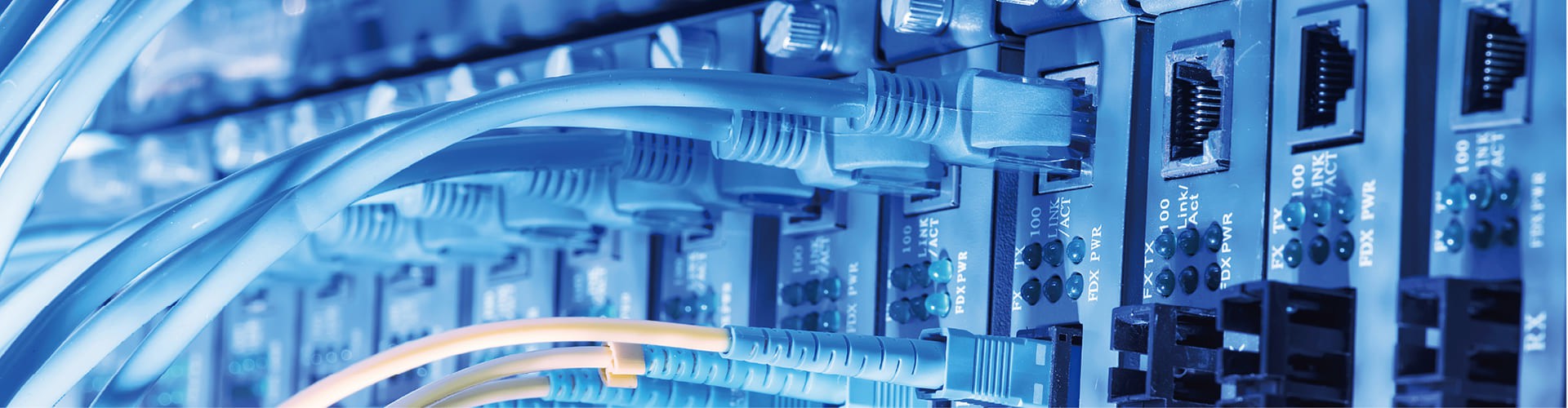
The Network Cable Manufacturer!
Linoya Electronic Technology Co., Ltd. was established in 1997. After more than 20 years of development, Linoya has grown into a large enterprise group specializing in three major product fields: intelligent transmission, smart power, and new materials. Integrating R&D, manufacturing, and sales, Linoya has established a comprehensive industrial layout, including three self-owned industrial parks-Shenzhen Linoya Technology Park, Dongguan Songshan Lake Linoya Industrial Park, and Dongguan Chashan Linoya Industrial Park-as well as two production bases in Dongguan Qishi and Vietnam.


Why choose us
High Quality
With years of expertise in the field, we specialize in the production and distribution of high-quality cables that meet stringent international standards.Our state-of-the-art manufacturing facility utilizes advanced technology and equipment to ensure precision and consistency in every product.
Our Certifications
Is a ISO 9001, ISO 14001, and ISO 45001 certified company. We are available globally with our Wires & Cables products certified to BASEC, UL, CSA, VDE, TUV Rheinland, & more and compliant to REACH and RoHS ensuring we adhere to global standards of quality and safety.
International market
Our products sell well in more than 30 countries and regions in the Middle East, Africa, South America and Southeast Asia, and we have established sales outlets in many major cities in China.
|
MODEL |
JACKET |
AWG |
Reference standard |
|
CAT5E U/UTP |
PVC/LSZH/LDPE |
24AWG |
TA/EIA568-C.2/ EN5017381E0/ EC11801/YD-T1019 |
|
CAT5E F/UTP |
PVC/LSZH/LDPE |
24AWG |
|
|
CAT5E SF/UTP |
PVC/LSZH/LDPE |
24AWG |
|
|
CAT6 U/UTP |
PVC/LSZH/LDPE |
24AWG/23AWG |
|
|
CAT6 F/UTP |
PVC/LSZH/LDPE |
24AWG/23AWG |
|
|
CAT6 SF/UTP |
PVC/LSZH/LDPE |
24AWG/23AWG |
|
|
CAT6A U/UTP |
PVC/LSZH/LDPE |
23AWG |
|
|
CAT6A SF/UTP |
PVC/LSZH/LDPE |
23AWG |
|
|
CAT6A U/FTP |
PVC/LSZH/LDPE |
23AWG |
|
|
CAT6A F/FTP |
PVC/LSZH/LDPE |
23AWG |
|
|
CAT7 SF/UTP |
PVC/LSZH/LDPE |
23AWG |
|
|
CAT7 F/FTP |
PVC/LSZH/LDPE |
23AWG |
|
|
CAT7A SF/UTP |
PVC/LSZH/LDPE |
22AWG |
|
|
CAT7A F/FTP |
PVC/LSZH/LDPE |
22AWG |
|
|
CAT8 SF/UTP |
PVC/LSZH/LDPE |
22AWG |
|
|
CAT8 F/FTP |
PVC/LSZH/LDPE |
22AWG |
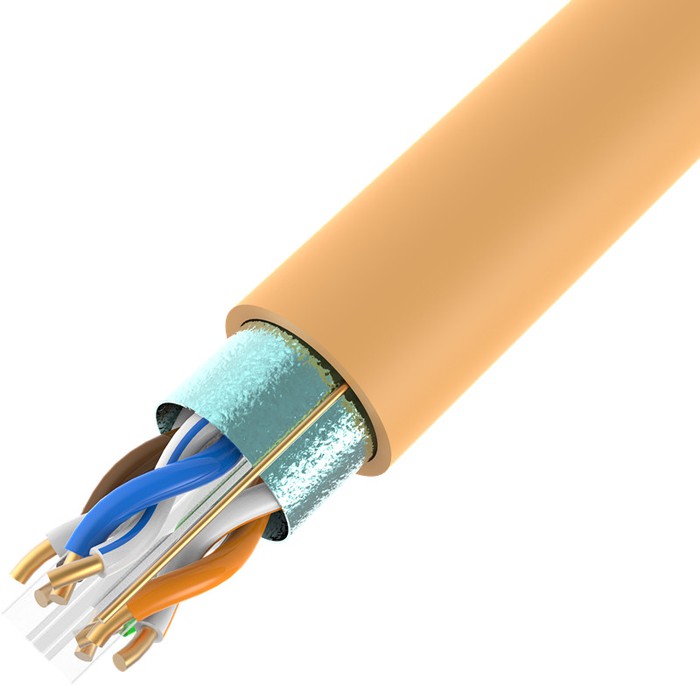
Advantages of Network Cable
Reliable and efficient data transfer
Structured cabling ensures stable and uninterrupted data flow, minimizing data loss and latency. This reliability supports critical services such as video conferencing, VoIP, and large data transfers.
Scalability to support future growth
Proper cabling is designed to handle increased data loads and accommodate additional devices without requiring a complete network overhaul. This scalability allows organizations to integrate new technologies as they grow seamlessly.
Enhanced communication and connectivity
A robust cabling system facilitates smooth communication between devices and systems, enhancing collaboration and productivity. This infrastructure enables faster data sharing, improved internal communication, and reliable remote work solutions.
Long-term cost-effectiveness
Durable and well-organized cabling reduces maintenance costs by minimizing downtime and simplifying troubleshooting. It also supports future upgrades, ensuring long-term savings by avoiding frequent infrastructure replacements.
Types of Network Cable
Coaxial Cable
This type of cable is commonly used in older buildings. It uses a copper core surrounded by an insulating material, then a metal sheath. The metal sheath gives it strength while keeping out outside elements such as water or dirt. It is straightforward to install and is often used in home networks. This type of cable is not recommended for use in commercial buildings because it can only transmit signals over short distances.
Fiber Optic Cable
This type of cable was developed as a replacement for coaxial because it can carry more data over longer distances with less loss than coaxial cables. Fiber optic cables consist of two thin pieces (sometimes called fibers) made from plastic or glass that transmit information through pulses of light instead of electricity, like other types of cables do. They have several advantages, including faster transfer rates, greater bandwidth capacity, immunity from electromagnetic interference, longer distances between nodes (100 meters compared to 10 meters on UTP), resistance against corrosion and fire damage if sealed adequately at each endpoint within a conduit leading outside building walls which may contain one or more fiber optic pair(s).
Shielded Twisted Pair (STP) Cable
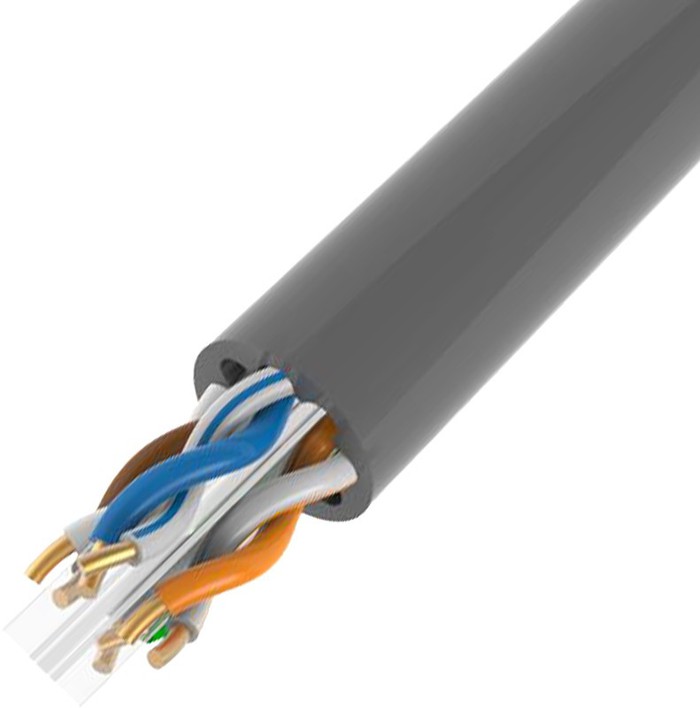
Shielded twisted pair (STP) cable is a single-pair wire consisting of four pairs: two pairs for transmitting signals and two for receiving them. This type of cable is commonly used in telephone systems and computer networks because it can withstand interference from power lines, radio waves, and other sources that could otherwise disrupt regular operation by introducing noise into signals being transmitted over long distances via copper wire connections between servers or desktop computers located within buildings.
Unshielded Twisted Pair (UTP) Cable
Unshielded twisted pair (UTP) is most commonly used in telephone lines because it is cheaper and easier to install than other cabling systems, such as fiber optic cable or coaxial cable. UTP is also used in computer networks because it can be run through walls and ceilings without needing additional tools or special equipment. This cabling system relies on copper wires that are twisted around each other to reduce interference from external sources that could disrupt data transmission over long distances via copper wire connections between servers.
Installation Best Practices
Plan Your Layout
Map out where cables will run before installation. Consider the distance between devices and avoid sharp bends.
Running Cables
Use a fish tape for guidance when running cables through walls or ceilings. Also, avoid running cables near power lines to minimize interference.
Terminating and Testing
Use proper tools to terminate cables accurately. After installation, always test connections with a cable tester to ensure functionality.
Labeling and Organization
Clearly label each end of your cables. Organize them neatly to avoid confusion and reduce the risk of accidental disconnection.

Packing Details
We will packing by professional export packing,safety against breakage, finally into the wooden cases/ carton/pallet or customized package.
Delivery Details
We can deliver by SEA,air,rail transportation,the China-Europe Railway Express etc.
TNT, DHL,UPS, FEDEX, EMS,S.F EXPRESS etc.
we are here for you
FAQ
We are one of the most reliable network cable manufacturers and suppliers in China since 1997. With abundant experience, we warmly welcome you to buy bulk customized network cable made in China here from our factory. Welcome to view our website for more information.
-
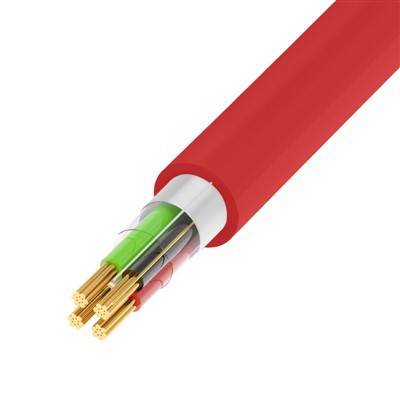
![UL1424 Fire Alarm Cable]() UL1424 Fire Alarm CableCables primarily used in circuits of emergency lighting, fire observation, signal - sensing sensor systems, supply...read more
UL1424 Fire Alarm CableCables primarily used in circuits of emergency lighting, fire observation, signal - sensing sensor systems, supply...read more -
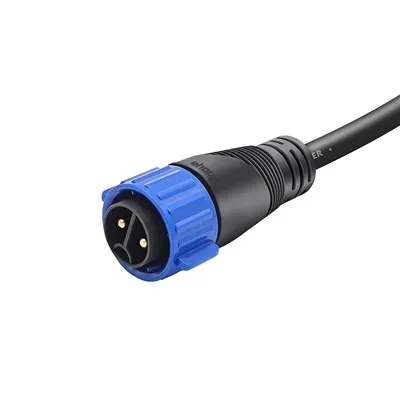
![Waterproof Connector Solution]() Waterproof Connector SolutionLinoya Waterproof Connectors provide IP65-68 protection for harsh environments. With 2-8 pins, 2-16A rating, and...read more
Waterproof Connector SolutionLinoya Waterproof Connectors provide IP65-68 protection for harsh environments. With 2-8 pins, 2-16A rating, and...read more -
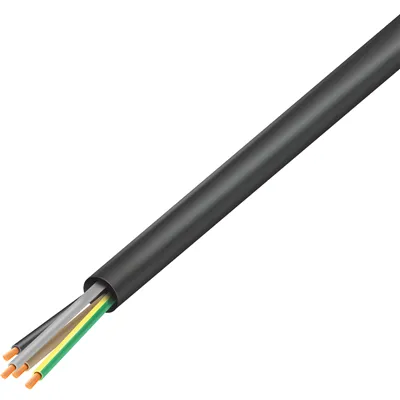
![Rubber Cable Solution]() Rubber Cable SolutionLinoya specializes in the R&D and production of high-quality rubber cables, compliant with international electrical...read more
Rubber Cable SolutionLinoya specializes in the R&D and production of high-quality rubber cables, compliant with international electrical...read more -
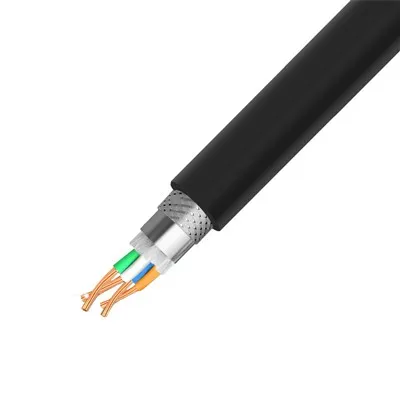
![Fieldbus Cable Solution]() Fieldbus Cable SolutionOur Fieldbus Cable is engineered for high-performance industrial networks, ensuring seamless data communication in...read more
Fieldbus Cable SolutionOur Fieldbus Cable is engineered for high-performance industrial networks, ensuring seamless data communication in...read more -
![Electrical Cable Solution]() Electrical Cable SolutionOur electrical cables provide safe and efficient power transmission for industrial, commercial, and residential...read more
Electrical Cable SolutionOur electrical cables provide safe and efficient power transmission for industrial, commercial, and residential...read more -
![Alarm Cable Solution]() Alarm Cable SolutionOur alarm cables are designed for fire alarm, security, and emergency systems. Featuring high-quality copper...read more
Alarm Cable SolutionOur alarm cables are designed for fire alarm, security, and emergency systems. Featuring high-quality copper...read more